
I recently bought a Tamron 150-500mm lens, a big, heavy and expensive piece of glass. Like many owners of a new lens, I wanted a UV filter on the front element as cheap insurance against scratches, dust and fingerprints. Whether a protective filter is worthwhile is a long-running debate in photography, since any extra glass can cost a little sharpness or light. Still, the 82mm front thread is a big, vulnerable surface, so I decided a filter was worth having.
Hoya is one of the best-known names in filters, so I searched for an 82mm Hoya UV filter. An eBay listing offered one, described as brand new, for £7.58. I was sceptical at that price, but I ordered it anyway, partly out of curiosity.
When it arrived, my suspicions were confirmed. This article follows the approach in Gough Lui’s investigation of a fake Hoya PRO1 Digital filter, which found several tell-tale signs on an eBay-bought filter. I checked mine against the same points. I can’t prove it is counterfeit without confirmation from Hoya, but the evidence points strongly that way.
Red flag 1: the price
A genuine 82mm Hoya filter from a reputable UK retailer costs considerably more than £7.58. Larger filter sizes cost more to make because they need more glass and tighter tolerances. A price this low doesn’t prove anything on its own, but it was the first hint that something was wrong.
Red flag 2: the packaging
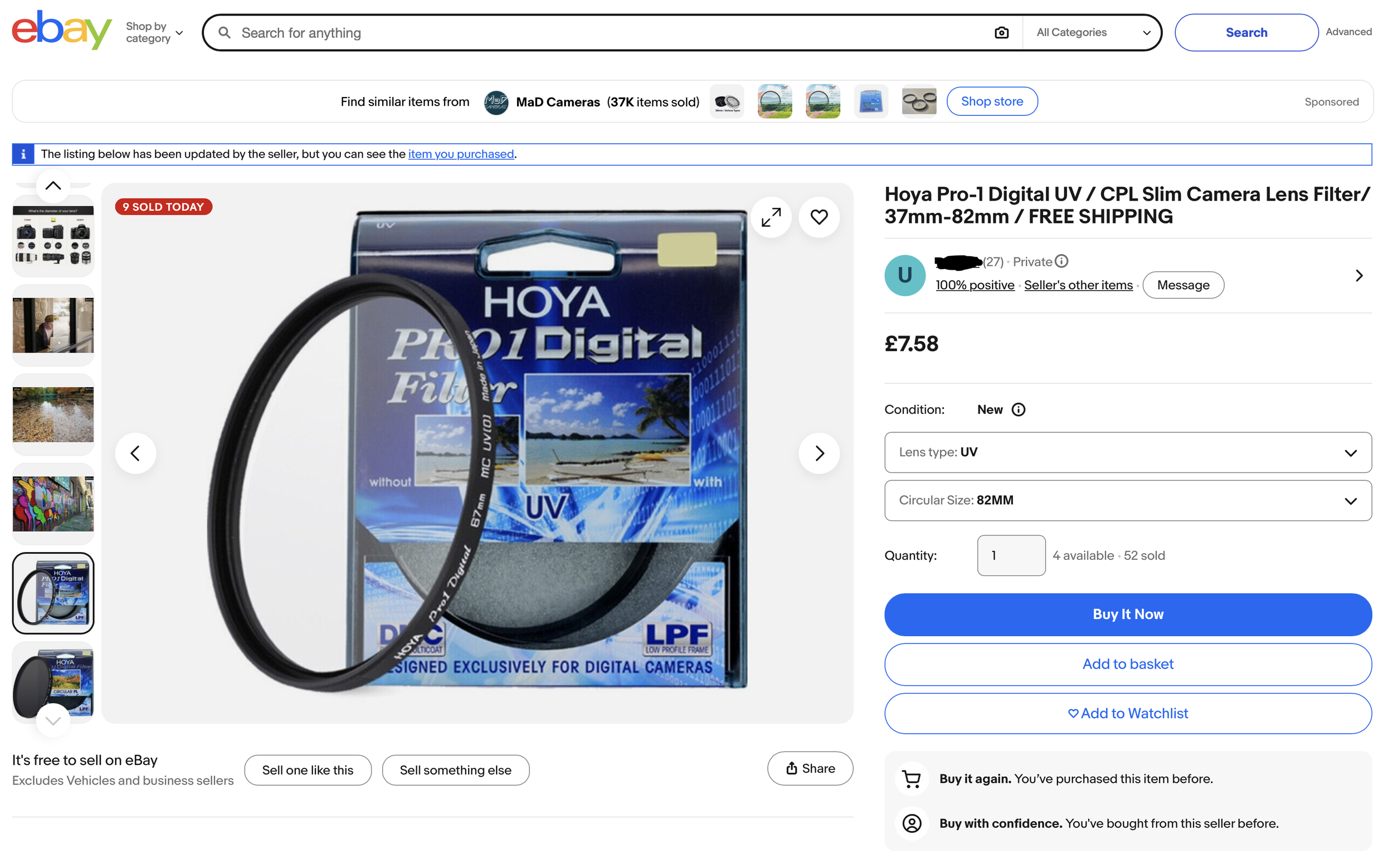
The box looked wrong as soon as I opened the parcel. The front carries a comparison image showing the effect of the filter, and on mine it was heavily pixelated, as though a low-resolution image had been blown up and printed. Genuine packaging from an established brand is normally sharp and cleanly printed.
Gough Lui’s counterfeit had similar print problems. Its colours were brighter and the print quality lower than a genuine box, and the text was sized and positioned differently. Bad printing is one of the easiest things to check, so I’d suggest comparing any suspect box against the manufacturer’s official product images.

Red flag 3: the barcode
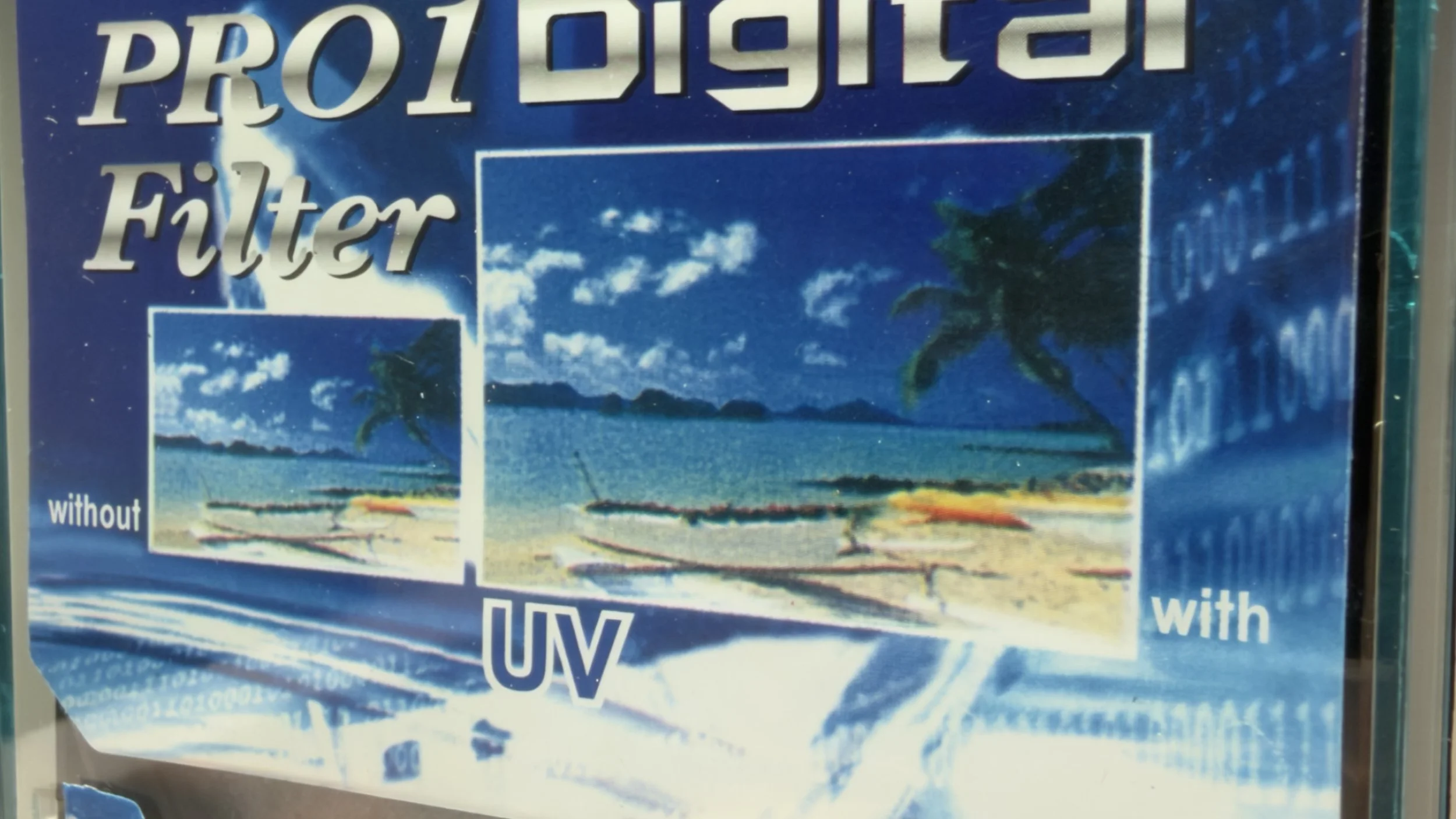
On the rear of the box, the barcode is printed directly onto the packaging rather than applied as a separate sticker. This matches what Gough Lui found. He noted that genuine Hoya packaging uses a separate barcode label, and cited reporting by Amateur Photographer on a wave of bogus filters. A commenter on his article reported the same pattern with fake Kenko filters, which also had printed barcodes where the genuine ones had stick-on labels.
A real barcode number can be copied onto a fake box, so the number itself doesn’t tell you much. The way it is applied tells you more.
Red flag 4: the coating test
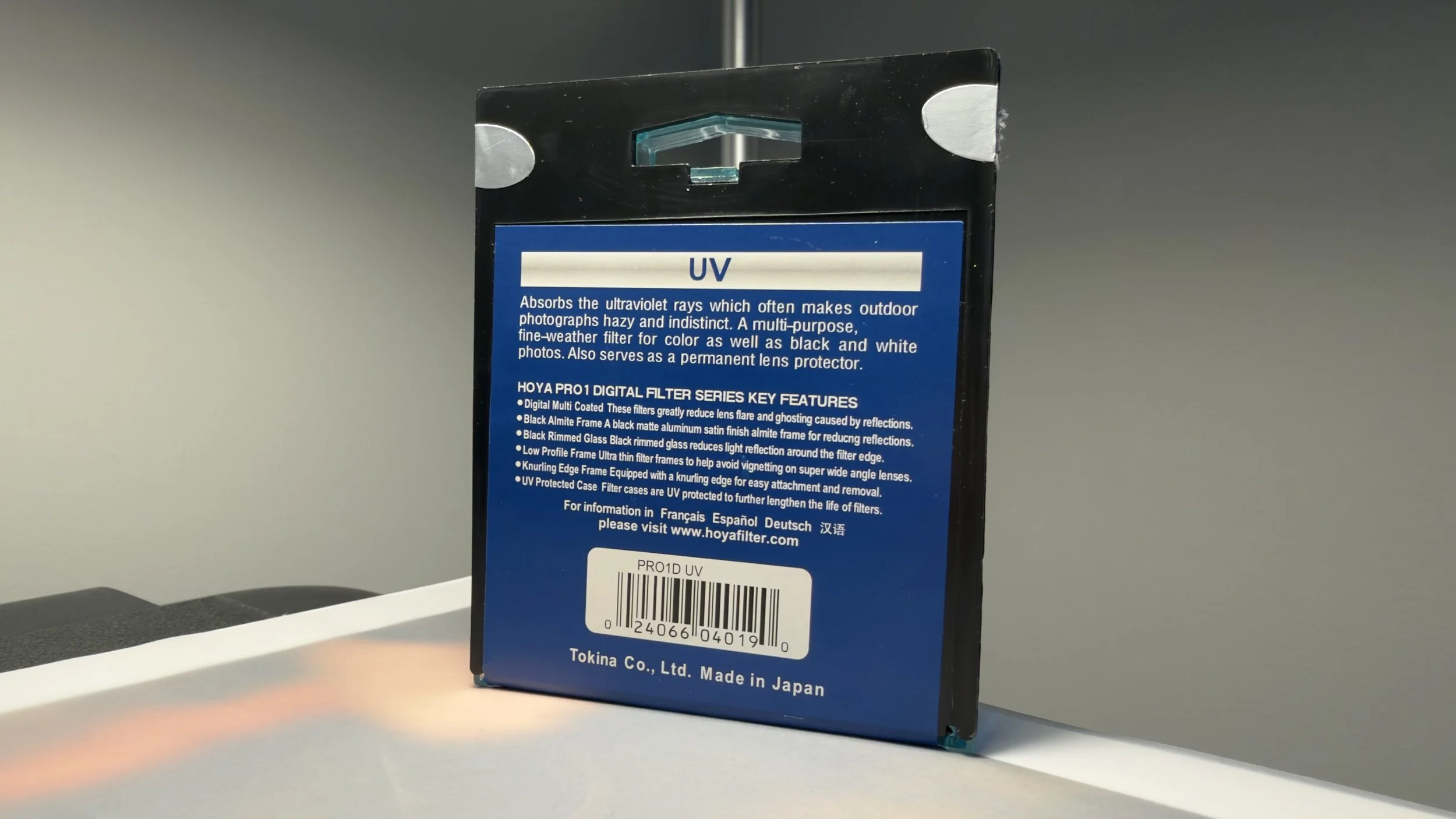
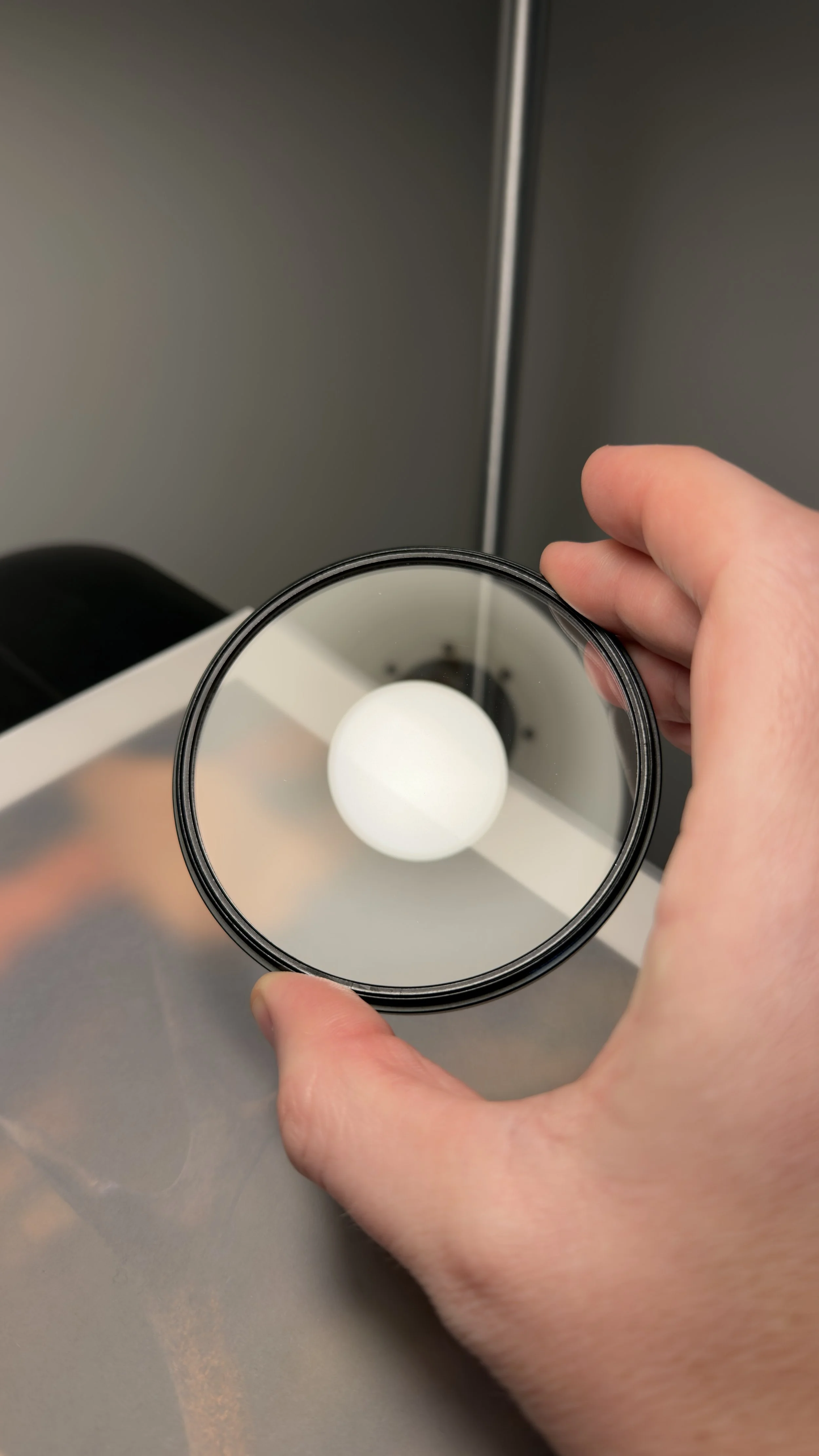
This is the most telling test. Genuine multi-coated filters have anti-reflective coatings, and when you tilt one in the light you see a coloured tinge in the reflection. The colour varies with the coating, but a coated filter shouldn’t reflect plain white light the way bare glass does.
I held a filter I know to be genuine next to the suspect one. The known filter showed the expected coloured reflection, and the suspect one did not reflect in the same way. That suggests it has little or no anti-reflective coating.
Gough Lui’s counterfeit behaved the same way. He compared it against a lower-end Hoya HMC UV filter, which should reflect more than the PRO1 range. The fake still reflected so strongly that detail on a black DVD case disappeared under it. In practice, a heavily reflective filter lets less light reach the sensor and is more prone to flare and ghosting. Those are exactly the problems you’re trying to avoid by buying a good filter.
What I can and can’t say
What I’ve observed:
The price is far below what genuine Hoya filters of this size typically cost
The packaging has poor print quality, with a heavily pixelated image
The barcode is printed on the box rather than on a separate label
The reflection differs from a known genuine filter, with no coloured tinge
What I haven’t done:
Tested optical performance (sharpness, transmission, flare) in controlled conditions
Had the item verified by Hoya or an authorised distributor
For that reason I’m calling it a suspected counterfeit, though every check I made points the same way. Like Gough Lui, I can’t say whether the glass itself is optically clean and flat, and I wouldn’t put it in front of a lens of this quality to find out.
The seller
While the seller only had a score of 27, I did send them a message and their response was “Sorry for the inconvenience. We took the goods from our suppliers and didn't expect this to happen. We will full refund for you.” There was no effort to even try and defend themselves which kind of solidifies my thoughts.
Gough Lui’s experience is a useful warning here. He opened a “not as described” case, and the seller refunded him quickly and then tried to cancel the transaction. Because the sale was cancelled, he couldn’t leave honest feedback, so the seller kept a strong record despite selling counterfeits. His seller’s feedback was full of positive reviews, probably from buyers who didn’t know what a genuine multi-coated filter looks like. It’s worth reading a seller’s feedback carefully, especially the few negative or doubtful comments.
How to check a Hoya filter before you buy
Be wary of prices far below retail. Check the same size at reputable camera shops.
Compare the packaging against official product photos from Hoya’s website or a major retailer. Look for blurry printing, odd text sizing and misaligned labels.
Check the barcode. Genuine boxes in these reports use a separate label, not a barcode printed on the box.
Check the coating. Tilt the filter in the light and look for a coloured reflection, and compare it with a filter you trust.
Buy from authorised dealers or established camera retailers where you can, and be careful with unknown marketplace sellers.
Conclusion
A £7.58 “new Hoya” filter looked like a bargain, and in my opinion it was too good to be true. The pixelated packaging, the printed barcode and the missing coating all match the counterfeit Gough Lui documented in 2019, which suggests the problem hasn’t gone away. A protective filter is only worth fitting if it protects without degrading the image, and a cheap uncoated one defeats the purpose. A Tamron 150-500mm is a big investment, and it isn’t worth risking its image quality on a doubtful accessory.