
Tonle Sap Lake: Markets, Crocodiles & the Floating Village of Kompong Phluk
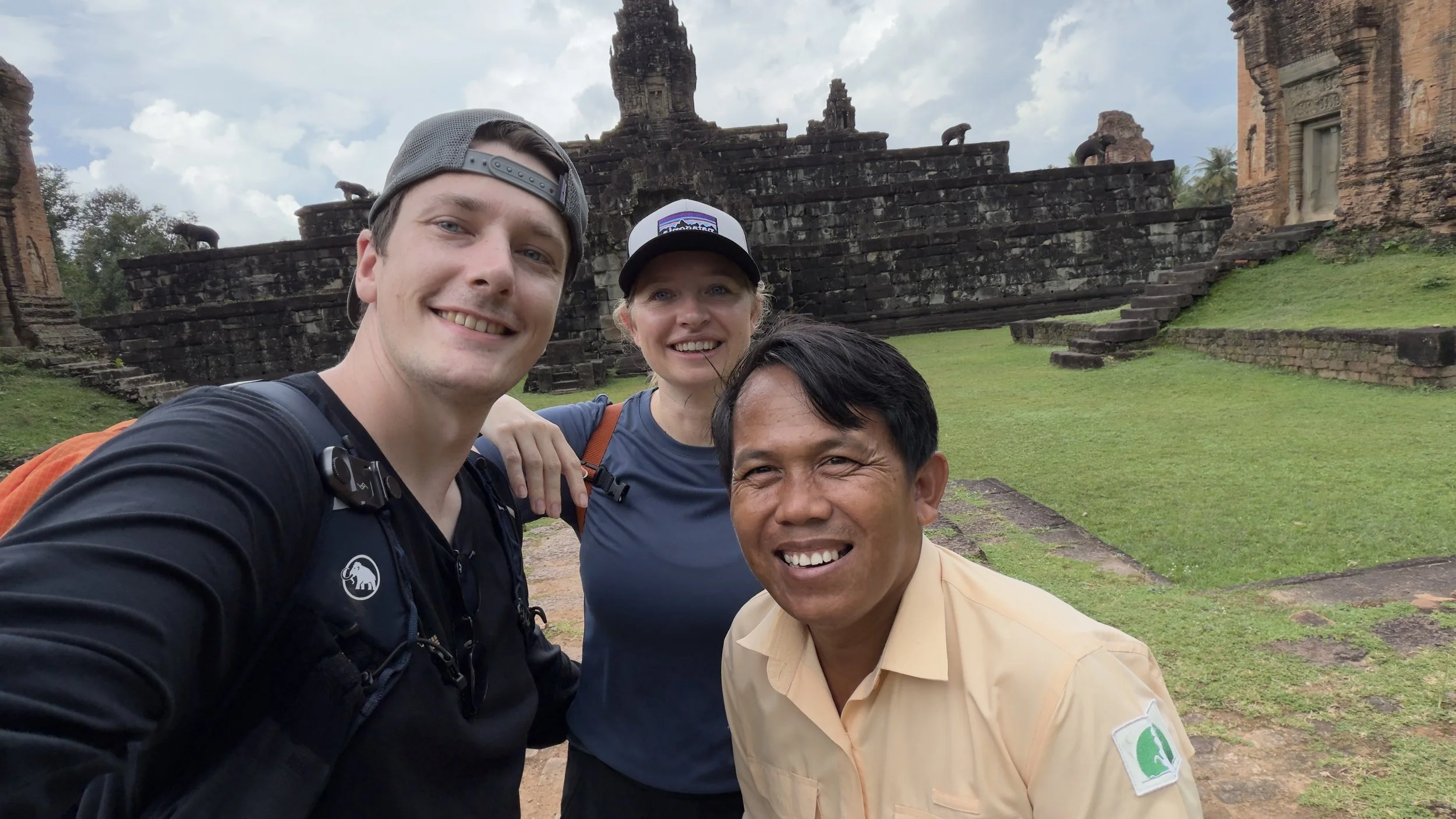
During our time in Cambodia, Annie and I booked a private day trip out to Tonle Sap Lake - something we’d both been looking forward to. It didn’t quite start as smoothly as we hoped, though. Despite us updating our pickup location, our tour guide went to the wrong hotel. After a short wait (and a couple of “are we sure they’re coming?” looks between us), they finally collected us and we set off towards the famous floating village of Kompong Phluk.
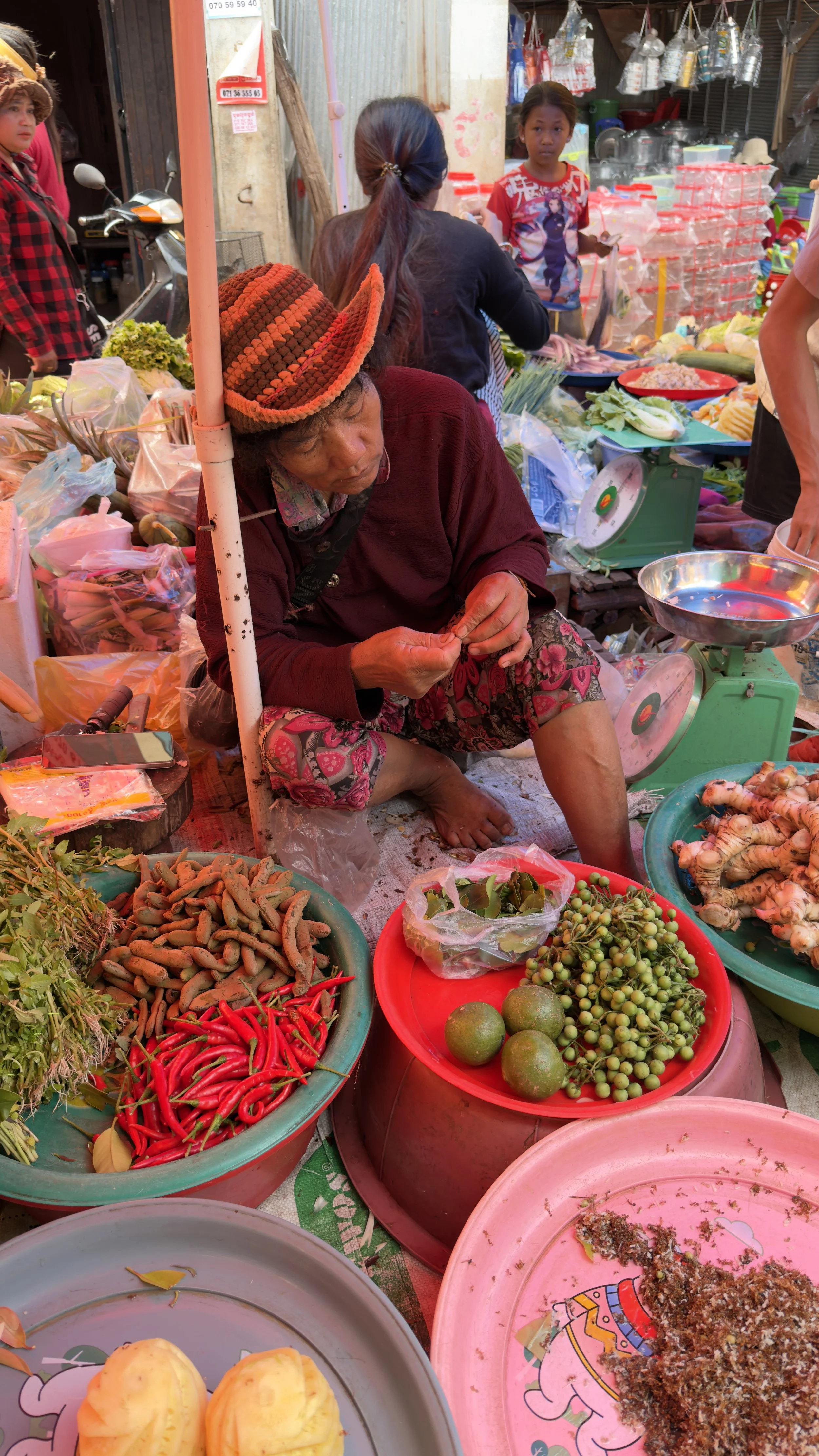
On the way, our guide pulled over at a local morning market. It was Organised Chaos at Its Best. This wasn’t a place tourists hang around - it was busy, loud, and completely real. Locals bartered over everything from fish and frogs to snakes. People were chopping, frying, gutting, selling… it was full-on and brilliant. I couldn’t help myself; the camera was out instantly. I moved through the narrow aisles snapping as much as I could while Annie took it all in. I couldn’t help but feel like an outsider. I felt people were likely questioning why we were there. Kids zoomed past us on motorbikes (because apparently that’s totally normal there), and the whole scene felt like stepping into everyday Cambodian life which was raw, hectic, and full of character.
Our guide had moved the car to the far side of the market, so after soaking it all in, we hopped back in and continued towards the lake.
A Quick Stop… for Crocodile Heads?
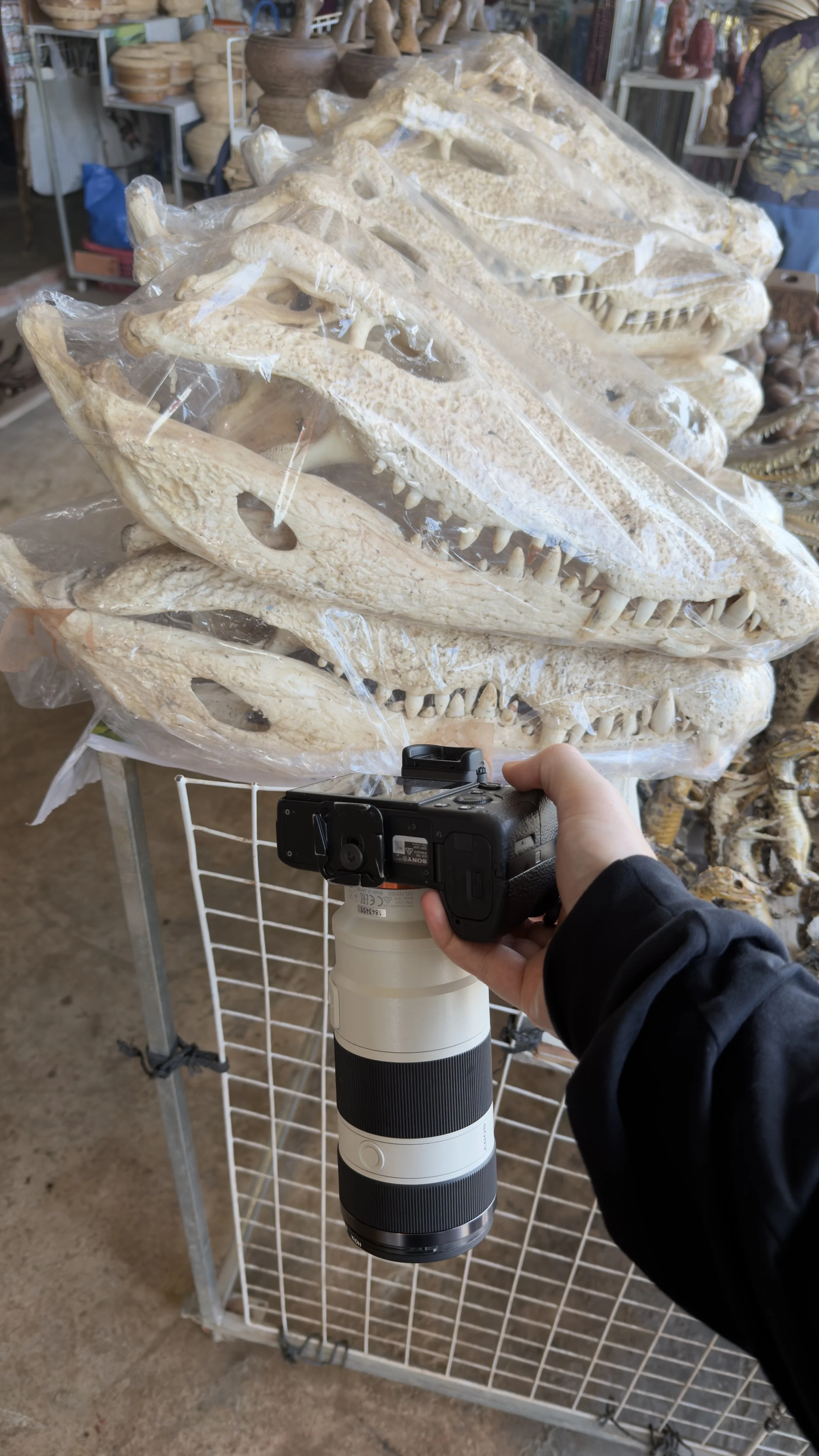
Before reaching the boats, we stopped so our guide could get tickets. I stepped out of the car and immediately spotted a pile of crocodile heads for sale. Yes - actual heads. Turns out crocodile farming is common in the area, and seeing those skulls and teeth laid out was equal parts fascinating and unsettling. I grabbed a few photos because realistically, when am I ever going to see that again?
The Boat: A Charming Mix of Ingenuity and Chaos
Before we headed out onto the water, we climbed into what I can only describe as a beautifully chaotic piece of Cambodian engineering. The boat itself was long and narrow, and powered by what was very clearly a retrofitted car engine bolted onto the back. The entire engine was fully exposed, pipes, belts, the lot - rumbling loudly as it shook the wooden frame beneath our feet. Up front were three pedals, all connected to the engine by a web of ropes that looked like they’d been threaded together over the years by trial, error, and pure optimism. To top it off, the boat was steered using a Honda car steering wheel, casually mounted onto the deck like it belonged there. It shouldn’t have worked… but somehow it did. The whole setup was wonderfully scrappy, resourceful, and surprisingly effective - a perfect example of how inventive people can be when working with whatever they’ve got.
Onto the Boat and Out to Tonle Sap
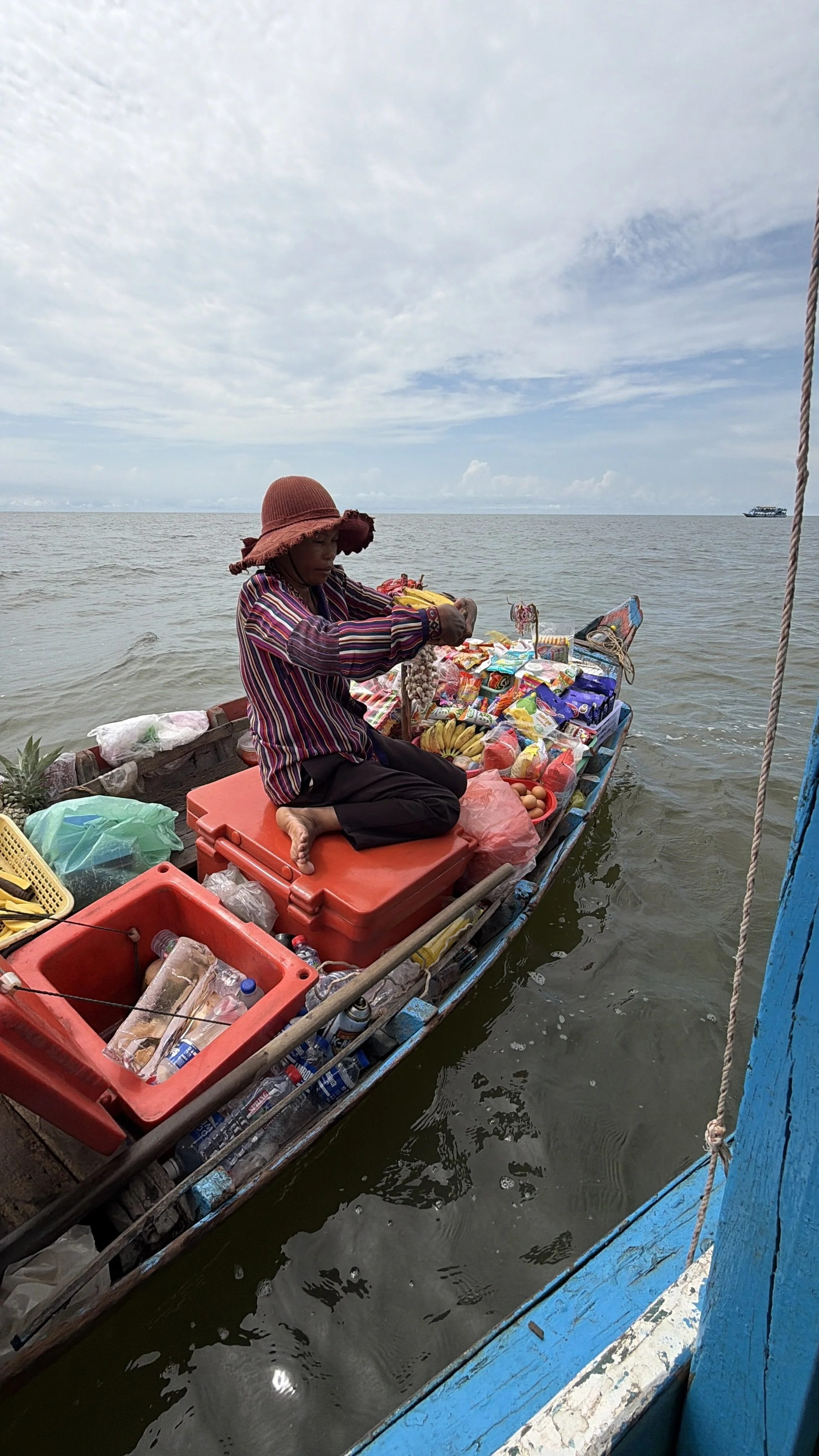
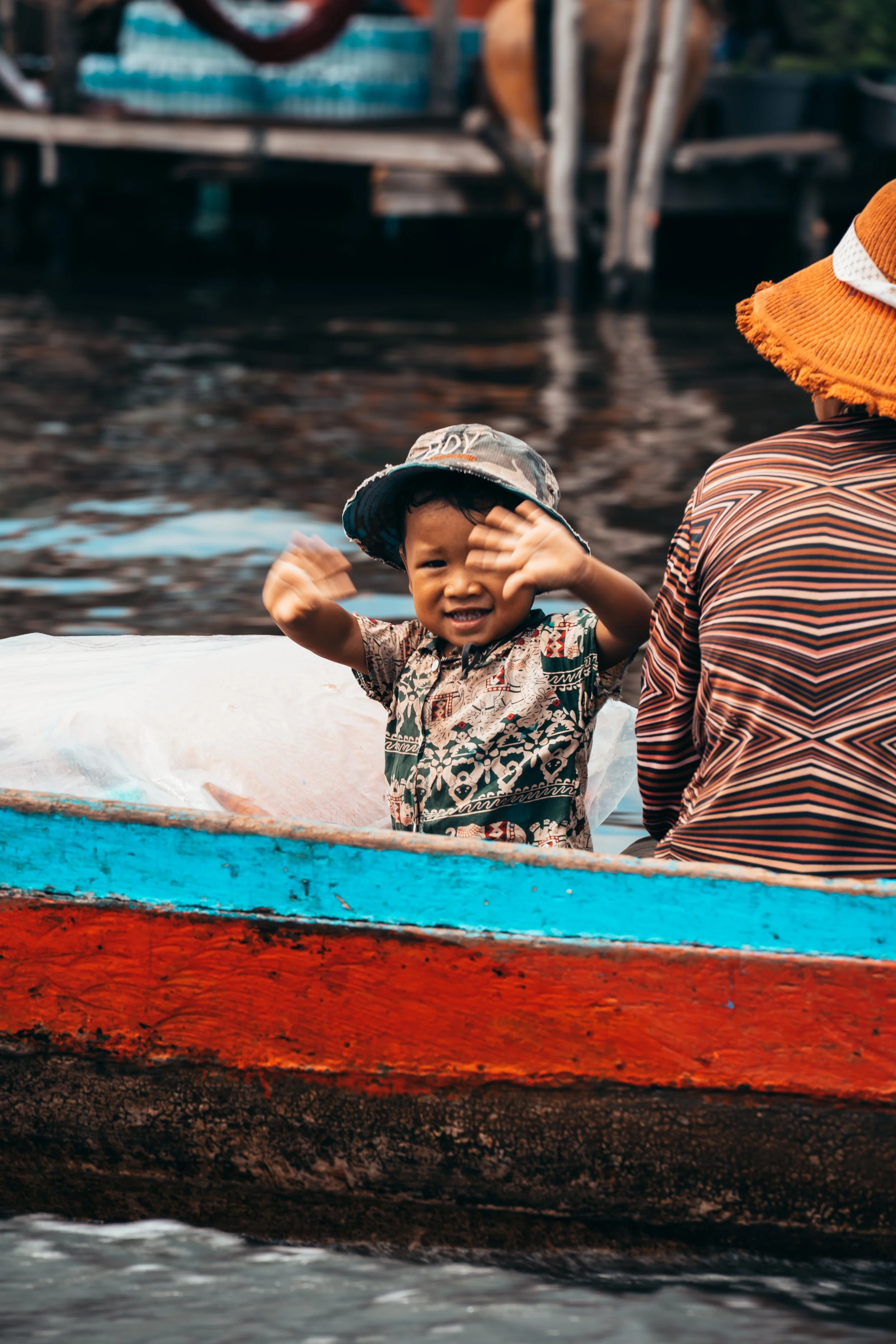
It was just us, our guide, and the driver. We slowly made our way down the river toward the open lake passing locals, and throwing waves in the hope you’d get a wave of a smile back, we often did. As the engine slowed, and we entered the large body of the lake, a small boat approached us. A woman and her young son were floating from boat to boat selling everything from toothbrushes to coconuts. Wanting to support them, I bought a couple of coconuts for Annie and me, along with some bananas we shared with our guide and boat driver. It really struck me how hard these families work, spending long days out on the water just to earn a small amount of Cambodian riel.
The Crocodile Farm: A Tough Sight
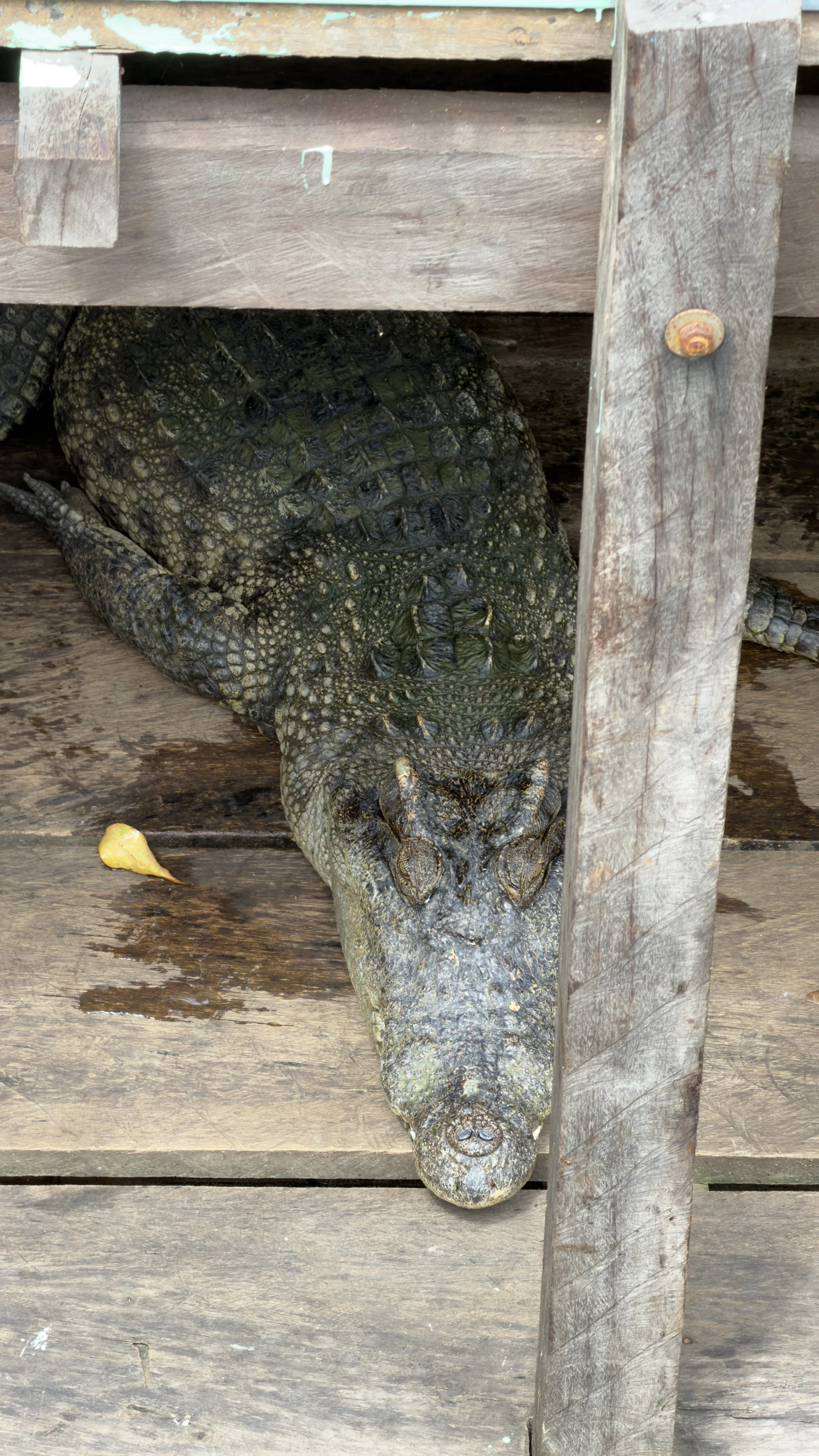
Heading back towards where the river meets the lake, we stopped at a crocodile farm. Honestly, this part was difficult. The farm itself felt very much like a tourist attraction - complete with a tiny “petting zoo” where people could hold small crocodiles and even a python. It didn’t sit right with us. Still, it was part of the experience, and who am I to judge how people make a living in their own country.
A Traditional Rowboat to Kompong Phluk
From that crocodile pontoon, a group of local women offered traditional small-boat rides through the floating village. This work provides jobs and income for them, so we hopped in and were rowed through the heart of Kompong Phluk. This was the most eye-opening part of the entire day.
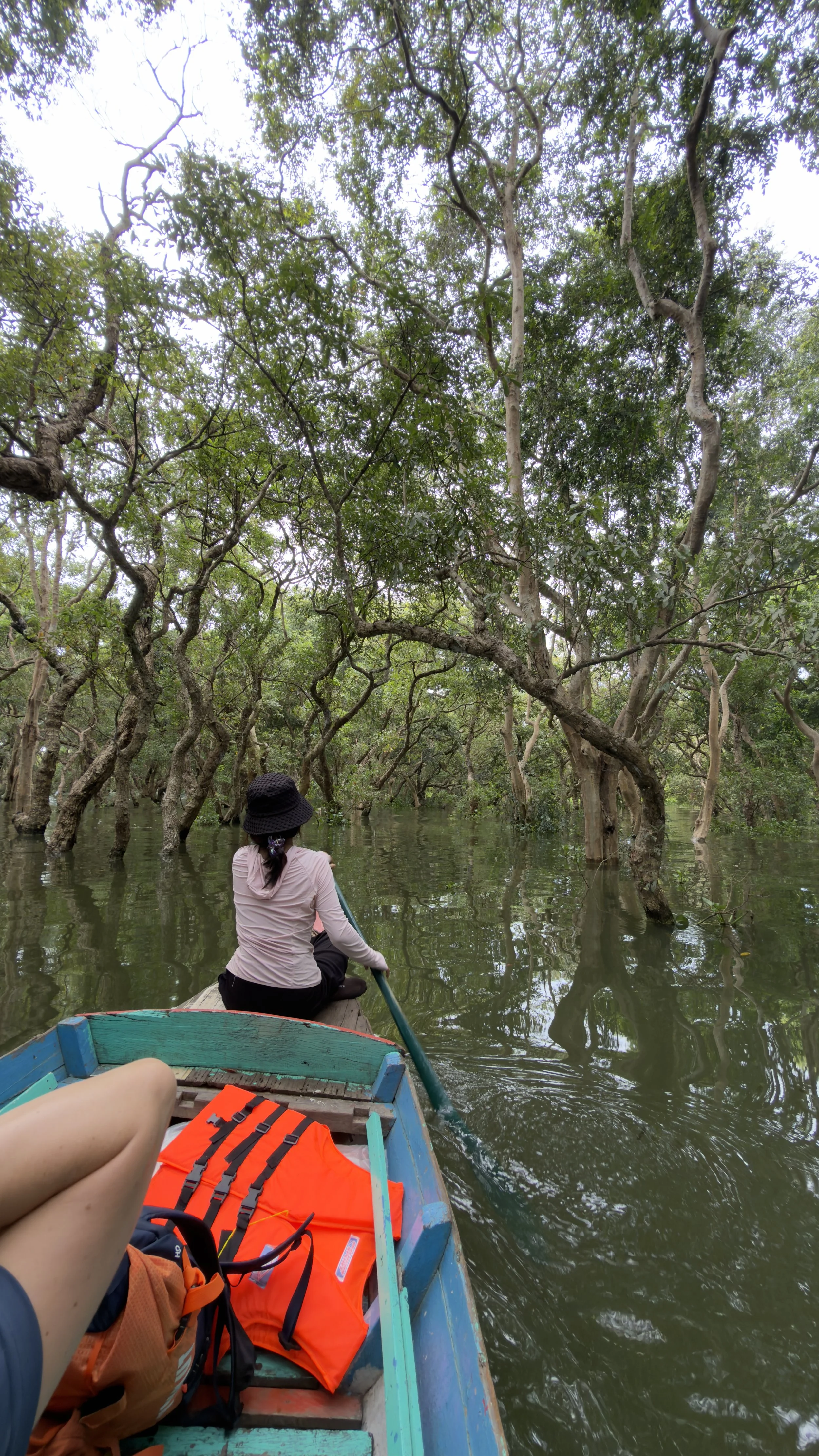
The water levels were incredibly high. Gates and entrances to the village were almost fully submerged — only the very tops of pillars poked out. Families lived in wooden homes raised on tall stilts, and people went about their daily routines as if nothing unusual was happening at all. The floating village of Kompong Phluk transforms dramatically with the seasons. During the high-water months, the lake swells, submerging the lower parts of homes and leaving only the stilts and rooftops visible above the water. Boats become the main mode of transport, and daily life flows along the waterways. In the dry season, the water recedes, revealing muddy banks and sandbars, and residents rely more on walking and cycling between homes and the surrounding fields. The rhythm of the village is entirely dictated by the rise and fall of the lake, a constant reminder of the close relationship between people and nature here.
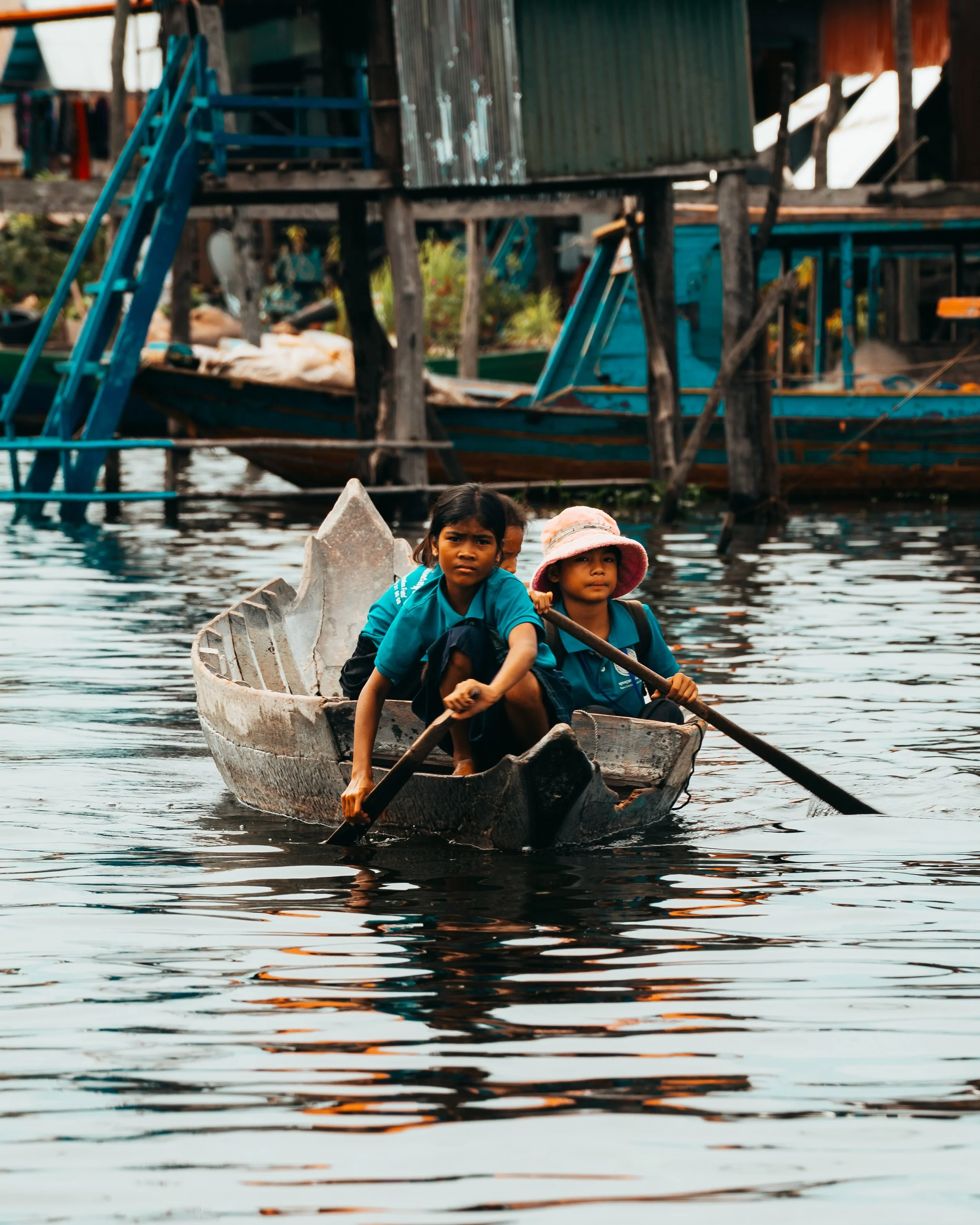
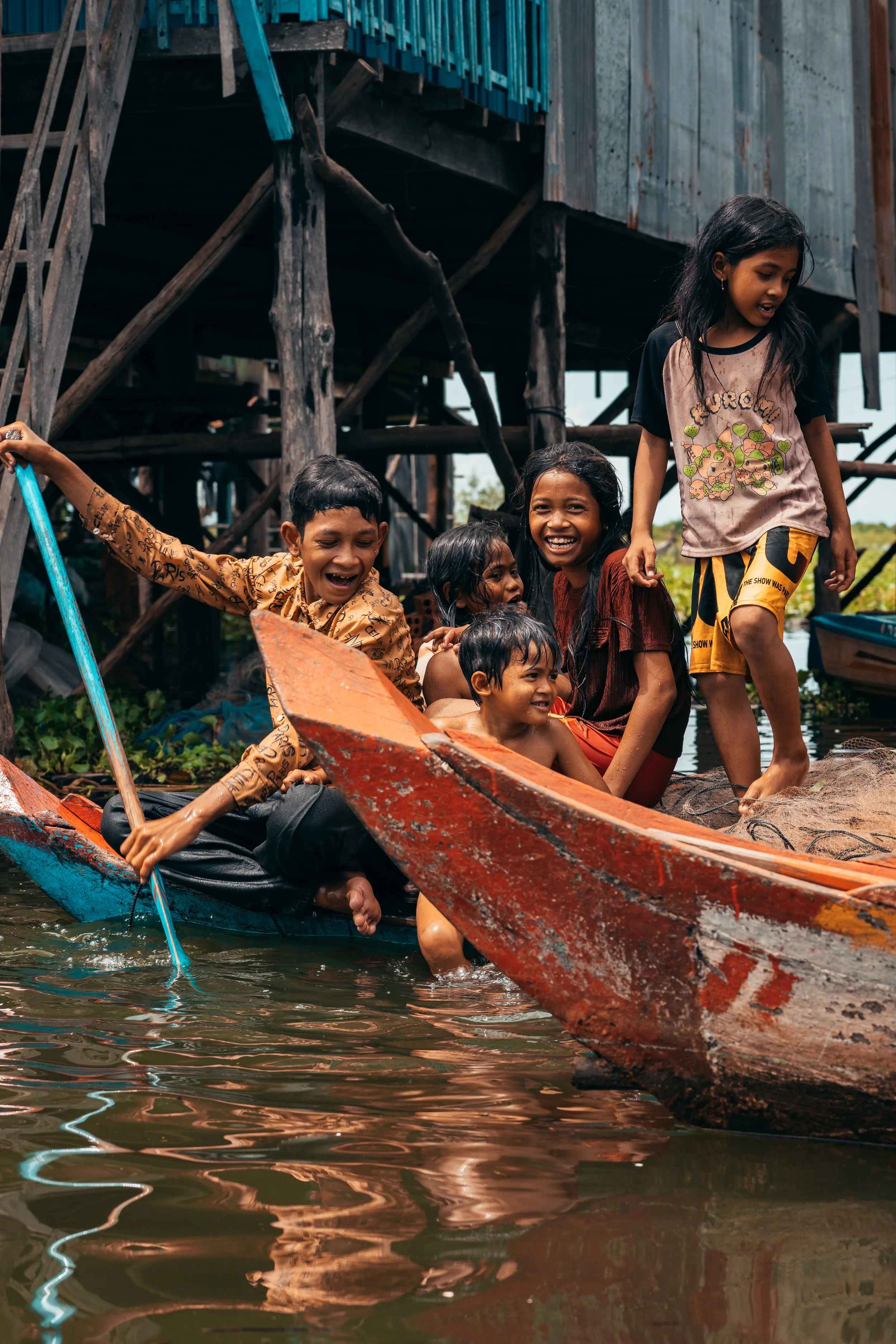
Children were swimming, laughing, and climbing in and out of boats like it was the world’s biggest playground. One of my favourite photos from the whole trip was a group of four or five kids crammed into a boat, laughing their heads off. Pure joy. We also saw kids brushing their teeth using the lake water, something that felt shocking to us, but completely normal to them.
A Day That Stays With You
Our guide shared tons of information about the village, the lake, and the people who live there. The whole day was a mix of fascinating culture, unforgettable sights, beautiful moments, and a few ethical challenges - especially around the crocodile farming. But above everything, it was one of the most memorable experiences we had in Cambodia. Raw, real, and unlike anything we’d seen before.
Featured Prints
from This Journey
BRING SOME OF THIS STORY INTO YOUR SPACE
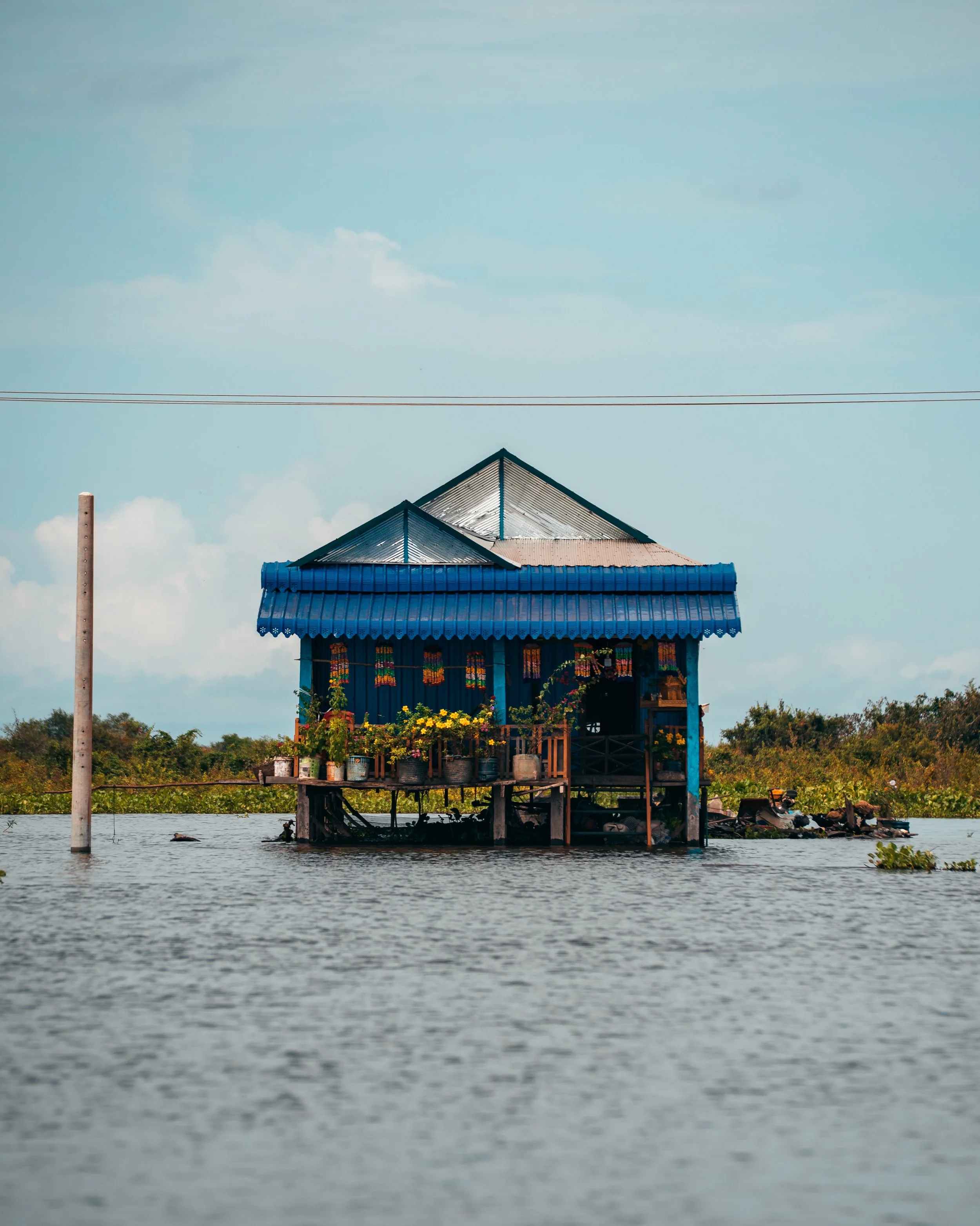
Bring a sense of travel, culture, and storytelling into your home with this fine art documentary print captured at Tonlé Sap Lake in Cambodia. During the rainy season, the waters rise dramatically, transforming the landscape into a vast floating world where daily life adapts to the rhythm of the lake.
A traditional floating house rests quietly on the water’s surface, surrounded by seemingly endless reflections. This powerful image captures a temporary way of living shaped by seasonal floods, where communities move with the water until the lake recedes and solid ground returns.
This Tonlé Sap photography print works beautifully as travel wall art, bringing a sense of narrative, place, and cultural depth to modern interiors.
This fine art print features a photograph captured by Luke Dokic on Tonlé Sap Lake in Cambodia.
Printed on Hahnemühle Photo Rag Pearl 320gsm, this print is available in A3 & A4 sizes. The image measures approximately 365 × 257mm on A3, presented with a surrounding border.
All Lunai prints are accompanied by a Certificate of Authenticity. Each certificate is wax stamped, and individually numbered with a unique serial number corresponding to the reverse of the print. Please note that COA hand-signing and edition numbering are exclusive to limited edition prints.
For care instructions please see our FAQ section here
Should you have any questions regarding any of our prints, please feel free to message us and we would be more than happy to assist you further.